
By Andrew Yang ———————————————-
The Lyssavirus is one of the deadliest viruses in the world, as it can cause a serious infection in the body, commonly known as rabies. Rabies is mostly fatal, with only a 1% survival rate. So, how does this mastermind devil overthrow and hijack our bodies’ defenses? Well, let’s find out.
———————————————-
PHASE ONE: INVASION
It all starts on a nice, sunny day. Pretend this, you are venturing into the woods, enjoying the blissful breeze flowing through your cheeks. Just as you are having one of your best moments in life, you stumble upon a wild dog. You see white saliva drooling from its mouth like that of a hungry beast. Suddenly, “ARRH! ARRH!” ferocious barks fill the atmosphere. Before you know it, “AAAHHH!”, you scream in excruciating pain as you feel your flesh is torn apart. When you look down, you see circular dot marks on your feet, with an area of your leg as red as a tomato. The dog has disappeared. You think, it’s fine! I’ll get over it.
Little did you know, the second the dog scraped away at your skin, millions of Lyssaviruses penetrated deep into your skin. As Lyssa gets into your tissues, it has one main goal — to get to the neurons and take over. Nerves have two parts, the neuron itself, and hundreds of long, winding tunnels called Axons. At the end of these tunnels are terminals, where cells pass along different chemicals as stimulants to talk to each other. Sneaky Lyssa binds to receptors and slips inside through the terminal into the Axon. That doesn’t mean it’s successful, though. The Axons often take days to cross for a small virus like Lyssa.
So, they take the more conventional way — through microtubules. These are like highways that connect directly to the nucleus. There are special motors, Dynein Motors, designed specifically for delivering vital nutrients and proteins to the nucleus. Lyssa hijacks this delicate system using one of its proteins on its hull that act like locks, locking them to the motors.
After Lyssa reaches the nucleus of the cell, it simply does what any virus in the body does, infect it! Lyssa injects DNA into the nucleus, forcing the cell to make clones of Lyssa. Usually, in a normal infection, when cells feel something is wrong with them, they send out signals called interferons, which, according to namesake, interfere with the viral infection process. Interferons are crucial in the early stages of viral infection control as they prevent the virus from spreading in three ways. First, they order nearby healthy cells to slow or stop their metabolism. That way, proteins that the virus needs in order to reproduce are destroyed, so the virus cannot clone itself effectively. Second, they signal infected cells to destroy themselves, along with the viruses in a process called apoptosis. Finally, they alert the immune system, the ultimate guardian of the human body. The virus prevents this from happening, and kind of creates a safe zone, a zone where viruses can jump freely from cell to cell.
Not only that, Lyssa reduces the “transparency” of the cell membrane. Immune cells don’t have eyes, so, in order to identify an object, it has to touch it. Normal cells display antigens, display proteins for the immune system to identify. If there are any abnormalities of these antigens, that can signal that the cell is producing a virus or it has mutated. Then, the immune system orders the cell to self-destruct. Lyssa makes the cell unable to produce viral-signaling antigens. So, the immune system just thinks the cell is fine and walks away. Another important strategy of Lyssa is that it doesn’t kill the host cell. Instead, it stealthily jumps to other cells. This also prevents an immune reaction as immune cells are attracted to the death of cells.
Now, Lyssa is able to get over your body’s first lines of defenses and moves through your nervous system. It’s about to infect one of your most important organs in your body — the brain.
———————————————-
PHASE TWO: CONQUERIZATION
Lyssa is a patient monster. Slowly, it infects neuron after neuron, until it reaches the brain. The process can take days or weeks and in rare cases, months or even years. Finally, your immune system picks up that something is wrong. It sends out one of our bodies fiercest troops — Killer T Cells. These cells are designed to kill, and are merciless against foreign invaders or your body’s own corrupted cells. But, again, little Lyssa plays one of its sneaky tricks again.
The immune system is designed to kill, kill so ruthlessly that they damage your body’s own healthy cells. This usually is not such a loss as there are millions of similar tissues that could replenish the damage. But, in the brain, things get complicated. It is the most vital organ in your body. Brain cells, neurons, communicate with each other through nerve signals. If one cell dies, a lot of others can die too, because there is no connection or electrical activity between those cells. Then, the neurons cannot send messages to each other and, thus, die. If a few haywire immune cells go wandering in the brain, it could result in instant death.
So, to protect the brain, the immune system has to be very careful and is not always invited. Even if the body thinks the immune system is okay, it has an extra layer of defense. If the neurons think the immune system is overreacting or is malfunctioning, it can order signals for the immune cells to destroy themselves. Lyssa manages to grasp this system and use it to its advantage by signaling the neurons to order the T Cells to well, commit suicide. Just like that, simple Lyssa bypasses and obscures your body’s best troops like a piece of cake.
It’s time for Lyssa to kill, as it infects your brain stem, the part of your brain that controls breathing, heart rate, and digestion.
———————————————-
PHASE THREE: MURDERIZATION
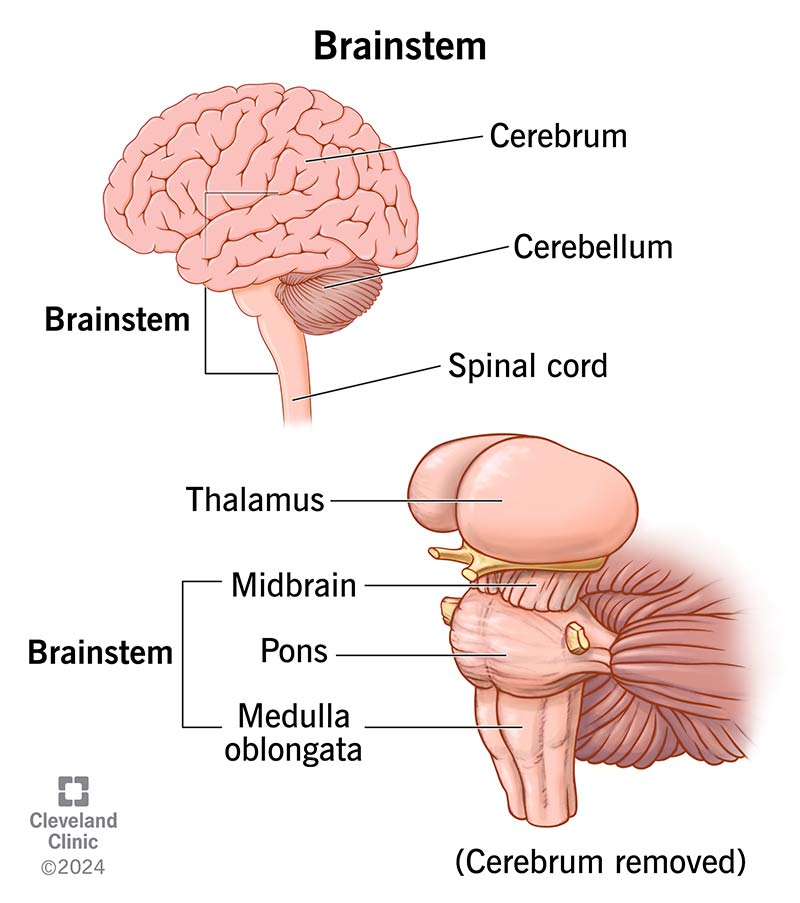
As Lyssa infects the most important part of your brain, death is irreversible. You develop encephalitis, an inflammation of your brain that causes it to swell and expand. Since your skull is tightly packed around your brain, it can only grow to 2% more than its original size without being pressurized. So, the inflammation is life threatening. By this point, you start to experience severe symptoms like confusion, paralysis, aggression, and impaired consciousness.
Then, Lyssa reverses its course and travels to your salivary glands. This is an unknown mystery of how Lyssa can travel back the way it came, considering that viruses are just mindless things blobbing and floating around, hoping to bump into a host cell. Anyway, Lyssa causes the salivary glands to produce extra saliva coated with Lyssa viruses. Now, here comes the part where Lyssa travels, or at least tries to infect other people.
You develop hydrophobia, fear of water. This is mainly because once you drink water, it could wash away your saliva full of Lyssa viruses. So, in order to get a better chance at spreading, Lyssa tricks your brain into fearing water. Remember, Lyssa needs to get into your bloodstream in order to infect you. So, this usually requires the patient to bite into another human being, like the way the dog bit into your skin. Fortunately, a zombie apocalypse won’t happen because humans are relatively smart beings and as it turns out, nobody has bitten anybody to transmit Rabies.
But, again, your life’s on the line. Organ after organ, gradually at first, then suddenly fails as you slip into a permanent coma. But, the most irascible thing is, scientists still don’t know the exact cause of death for Rabies. Usually, for a typical virus, the immune system gets hyperactive and sends Cytokine Storms raging all over the body, causing excessive damage to your tissues. But, for rabies, minimal damage occurs to the brain as Rabies does not kill neurons, and there is no visible evidence of Cytokine Storms. It is believed that Rabies disrupts signals between neurons and stops the communication between them. This can somewhat explain how Rabies causes death.
————————————————————–
But, the good news is that you can prevent Rabies, and that is — the Vaccine! Rabies is one of the first viruses for humans to have produced vaccines. In fact, Rabies is so slow that vaccines can be applied even after being bitten. This makes Rabies so much more manageable. So, if you have been bitten by an animal or think you have, it’s always good to take a vaccine to prevent serious infection.
————————————————————–
Rabies is a monster that haunted our ancestors for at least 4000 years, and it will continue to do so if we lose respect for it. We can only hope that it will be slayed in the future, and become like any other monster humanity has slayed, in fantasies and myths.
———————————————————————-
Sponsor
Kurzgesagt — in a nutshell. Kurzgesat has given me a lot of information about the immune system and its mysteries. It sparks my interest and keeps me wondering and thinking…thank you!
WOW. I love how you were so descriptive when you described the wild dog scene.